MoIT reviews revised Power Development Plan VIII projects in Ho Chi Minh City
- Date modified:10:10, 19/6/2026
MoIT reviewed revised Power Development Plan VIII projects in Ho Chi Minh City, focusing on removing obstacles and ensuring a stable power supply.
Accelerating key power projects under the revised Power Development Plan VIII
On the afternoon of June 18, the Ministry of Industry and Trade (MoIT) held a working session with the Ho Chi Minh City People's Committee on the implementation of power grid projects under the revised Power Development Plan VIII. The meeting was chaired by Deputy Minister Nguyen Hoang Long.
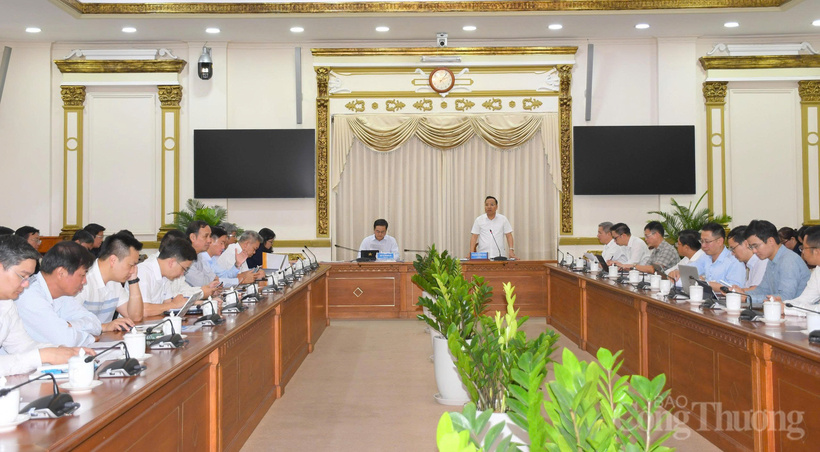
Deputy Minister of Industry and Trade Nguyen Hoang Long chairs the working session. Photo: Thanh Minh.
The event was attended by representatives of the Electricity Authority of Vietnam; Vietnam Electricity (EVN); the National Power Transmission Corporation (EVNNPT); Ho Chi Minh City Power Corporation (EVNHCMC); Southern Power Corporation (EVNSPC); as well as representatives from municipal departments, agencies and related units.
Speaking at the meeting, Deputy Minister Nguyen Hoang Long stressed that the adjustment to the National Power Development Plan for the 2021 - 2030 period, with a vision to 2050, was approved by the Prime Minister under Decision No. 768/QD-TTg dated April 15, 2025. The Ministry of Industry and Trade subsequently approved the implementation plan for the revised Power Development Plan VIII under Decision No. 1509/QD-BCT dated May 30, 2025.
According to the Deputy Minister, this is an especially important national sectoral plan that helps ensure consistency in state management of the electricity sector, strengthens national energy security, and lays a sustainable infrastructure foundation for the country's comprehensive socio-economic development in the coming years.
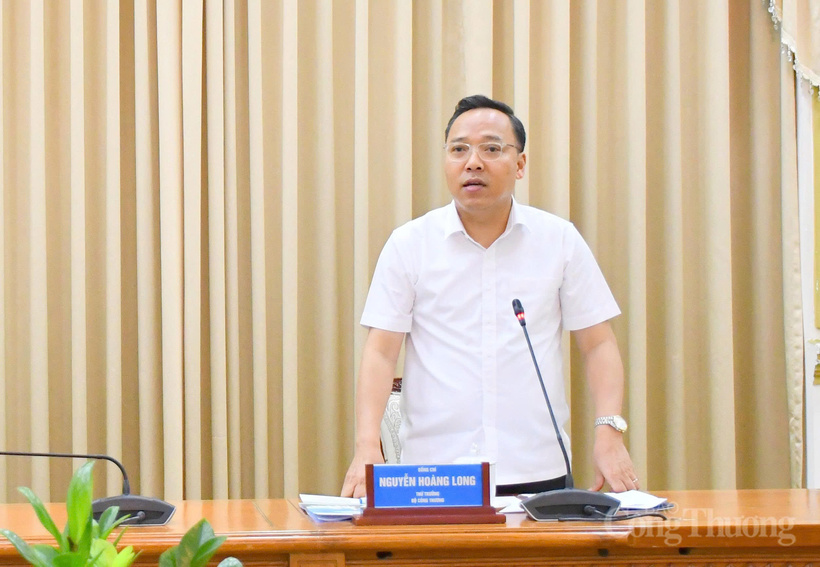
Deputy Minister Nguyen Hoang Long. Photo: Thanh Minh.
The implementation of power projects, including both power generation and transmission projects, under the revised Power Development Plan VIII and its implementation plan has been identified by the Government and the Ministry of Industry and Trade as an urgent priority task. The objective is to bring projects into operation as quickly as possible to ensure adequate electricity supply for socio-economic development and people's daily needs during the upcoming period of accelerated growth, while supporting the goal of achieving double-digit economic growth.
In recent years, the Government, the Prime Minister and the Standing Government have issued numerous directives and official dispatches aimed at ensuring sufficient electricity supply for production, business activities and daily life. The Prime Minister has personally inspected projects, urged progress and resolved difficulties to accelerate the implementation of power generation and transmission projects. Meanwhile, the MoIT leader has held multiple meetings with ministries, sectors, localities, groups and corporations operating in the energy sector to expedite project implementation.
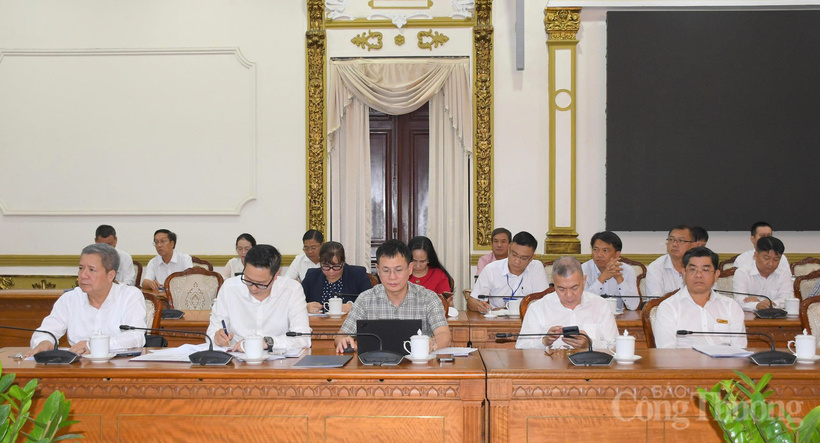
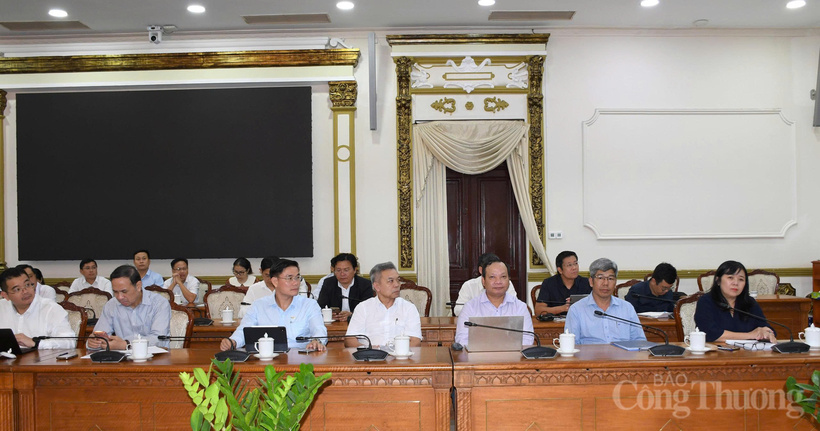
Delegates attend the event. Photo: Thanh Minh.
However, the implementation of power generation and transmission projects under the revised Power Development Plan VIII continues to face various obstacles related to mechanisms, policies and investment procedures, creating potential risks of power shortages in the future if timely and decisive measures are not taken.
Deputy Minister Nguyen Hoang Long said that the ministry has established 14 working delegations to help remove obstacles facing power projects under the revised Power Development Plan VIII in provinces and cities nationwide. The ministry has also issued numerous documents requesting local authorities to implement projects and resolve bottlenecks, including reporting difficulties arising from both legal regulations and implementation processes.
In addition, to implement Resolution No. 70-NQ/TW dated August 20, 2025, issued by the Politburo on ensuring national energy security through 2030 with a vision to 2045, the ministry advised the Government in submitting to the National Assembly Resolution No. 253/2025/QH15 on mechanisms and policies for national energy development during the 2026-2030 period. The resolution is intended to address institutional bottlenecks that have hindered development in recent years, accelerate power projects and ensure energy security during the 2026-2030 period.
To effectively implement Resolution No. 253/2025/QH15, the ministry has also issued three documents requesting local authorities to review and prepare proposals for updating and adjusting power projects in their localities.
Deputy Minister Nguyen Hoang Long urged Ho Chi Minh City to continue working closely with the ministry in reviewing, advising on and proposing the formulation or amendment of legal documents related to the electricity sector to facilitate investment in power projects in line with practical requirements. He also emphasized the need to carefully study regulations to ensure they both attract investment and balance the interests of investors, the State and the public, while preventing waste, losses and vested interests.
Multiple challenges related to land, investment procedures and site clearance
At the meeting, departments, agencies and relevant units of Ho Chi Minh City reported on the review and adjustment of municipal and sectoral planning schemes to identify power project portfolios in accordance with current regulations.
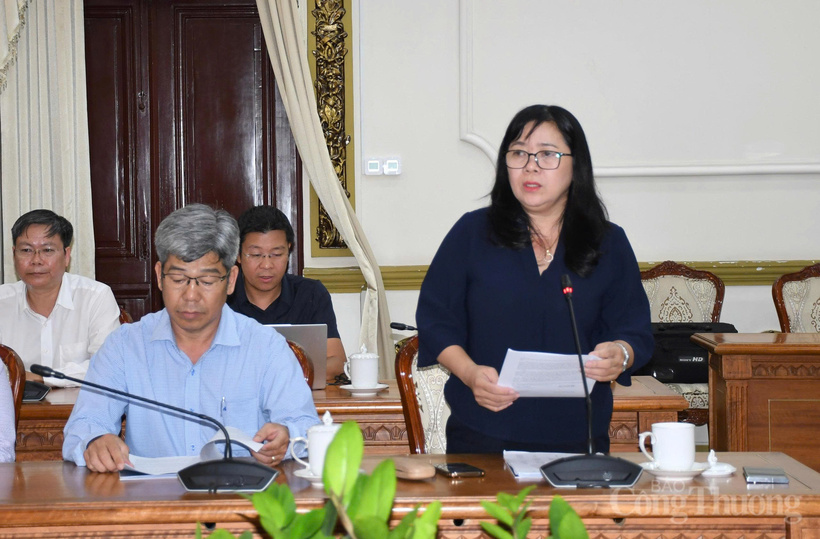
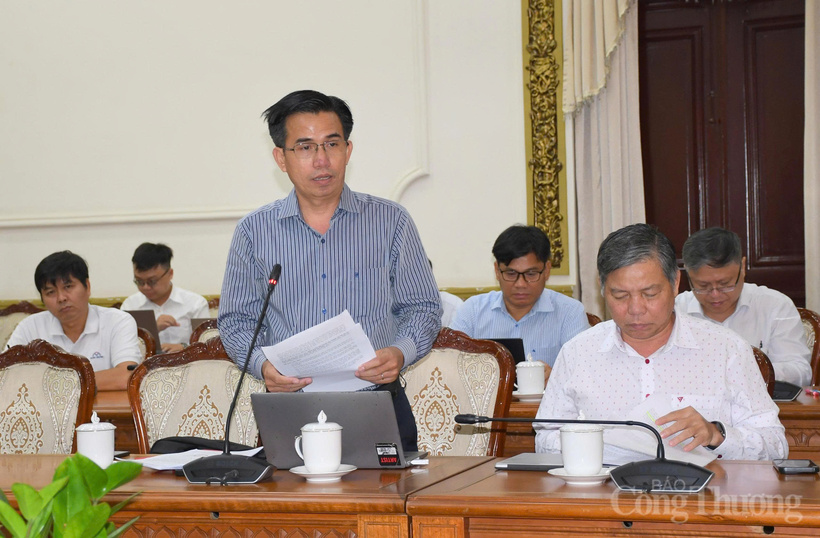
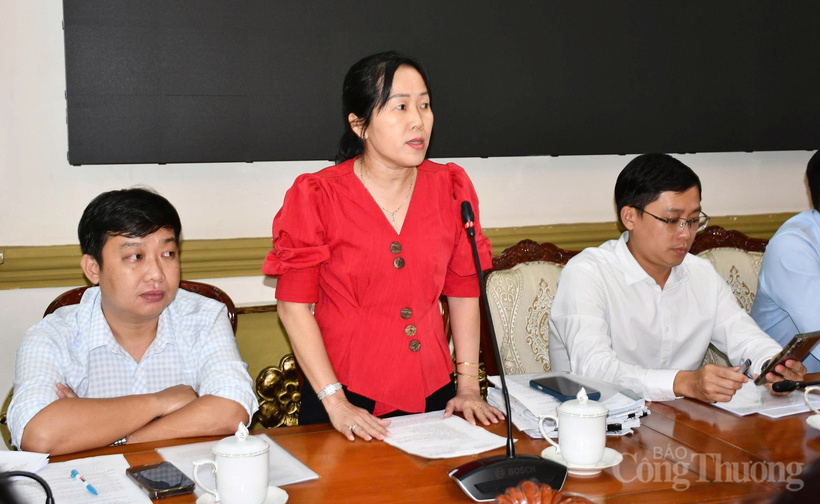
Representatives of Ho Chi Minh City's departments report on the implementation of power grid projects under the revised Power Development Plan VIII.
The participants also updated progress on power generation and transmission projects in the city, the approval of investment policies and investor selection, land allocation for electricity infrastructure development, as well as compensation, resettlement support and site clearance work.
According to the reports, many projects are facing difficulties due to obstacles involving investment procedures, land policies, construction planning, investment approval procedures and site clearance.
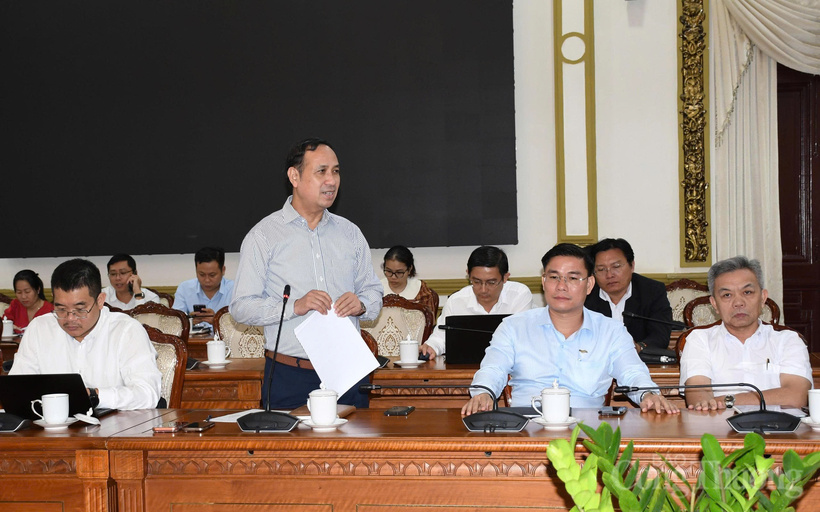
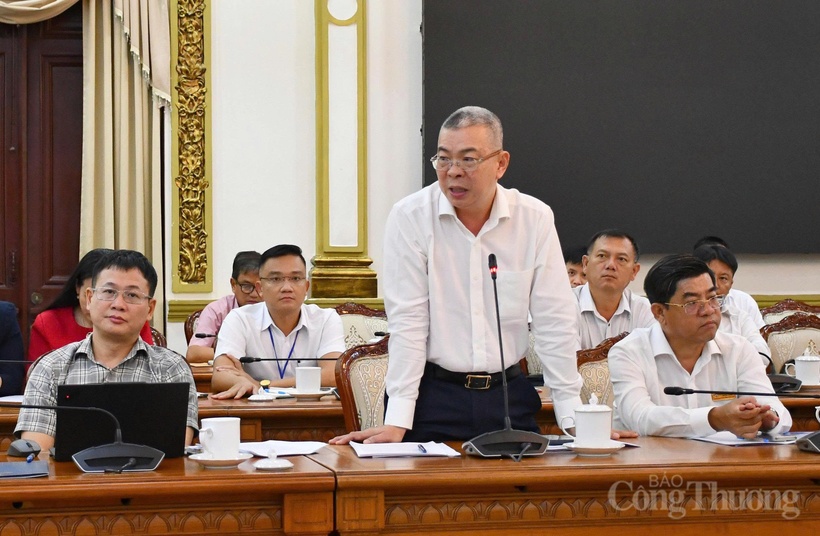
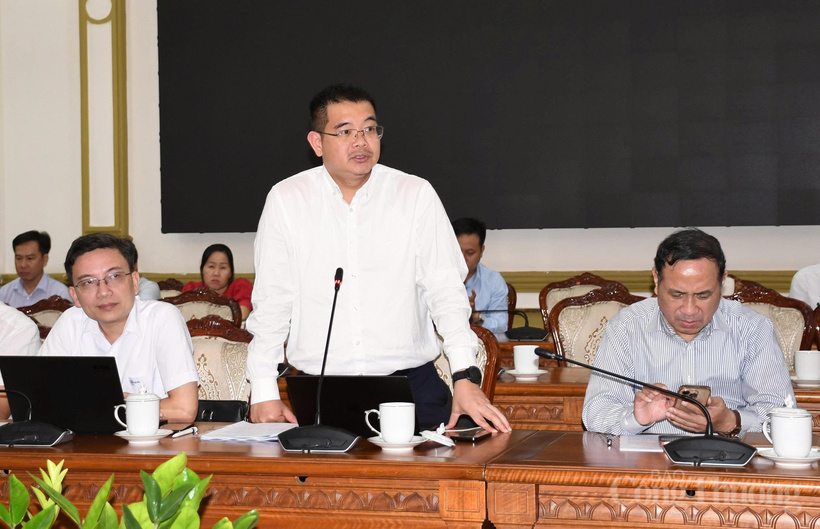
Representatives of the power sector highlight obstacles and challenges in the implementation of power projects in Ho Chi Minh City. Photo: Thanh Minh.
The units noted that although the Ho Chi Minh City People's Committee has repeatedly held thematic meetings, issued conclusions and directed departments and agencies to focus on resolving difficulties facing the electricity sector, the workload remains substantial, particularly as demand for investment in transmission and distribution systems continues to rise rapidly.
Many participants also recommended the early completion of implementation guidelines for Resolution No. 253/2025/QH15 and the acceleration of adjustments and updates to relevant planning frameworks in order to provide a legal basis for implementing power projects on schedule.
Power sector representatives proposed further strengthening coordination between local authorities and project developers in handling land procedures, compensation and resettlement support. They also suggested additional measures to remove obstacles and speed up project implementation under the revised Power Development Plan VIII.
Concluding the meeting, Deputy Minister Nguyen Hoang Long emphasized that the opinions and recommendations raised by the city and relevant units would be compiled and carefully studied by the ministry to finalize post-meeting conclusions, serving as a basis for resolving difficulties encountered during the implementation of power projects in the city.
According to the Deputy Minister, the overarching requirement is to firmly ensure energy security for Ho Chi Minh City. This is a prerequisite for the city to maintain its role as the country's economic engine and achieve its growth targets in the coming years. As electricity demand continues to increase alongside socio-economic development, energy infrastructure preparation must be undertaken early, comprehensively and with a long-term vision.
No power shortages in Ho Chi Minh City under any circumstances
The deputy minister reaffirmed the consistent principle that electricity development must stay one step ahead and that energy infrastructure must be prepared proactively and well in advance. The city cannot wait until demand surges or shortages occur before launching investments, as both power generation and transmission projects require lengthy preparation and implementation periods. Therefore, planning, land allocation, investment resource preparation and related procedures must be carried out in a coordinated manner from now on.
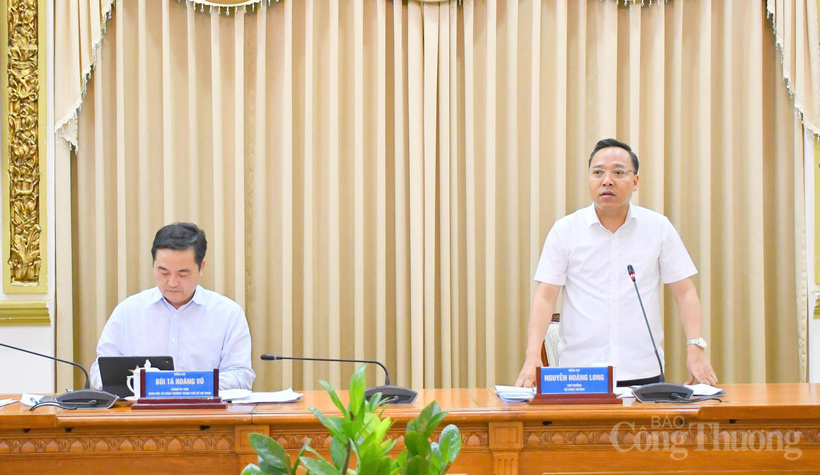
Deputy Minister Nguyen Hoang Long: Ho Chi Minh City must not face power shortages under any circumstances. Photo: Thanh Minh.
According to Deputy Minister Nguyen Hoang Long, practical experience has shown that delays at any stage can affect an entire project. Therefore, coordination among state management agencies, local authorities, power companies and investors is of particular importance. He proposed that Ho Chi Minh City consider establishing a standing steering body on energy security to provide a focal point for monitoring overall implementation and advising city leaders on management and direction.
The deputy minister also requested all relevant units to uphold the principle that Ho Chi Minh City must not face power shortages under any circumstances. This is not only a professional responsibility of the electricity sector but also an important political task for the Ministry of Industry and Trade, power groups and corporations, and local authorities. Ensuring a stable and uninterrupted electricity supply is fundamental to sustaining economic growth, attracting investment and improving people's quality of life.
He affirmed that the Ministry of Industry and Trade is committed to accompanying Ho Chi Minh City in fulfilling this political task and imperative, ensuring that the city does not experience electricity shortages. The ministry will continue to work closely with EVN, EVNNPT, EVNHCMC and relevant agencies to resolve obstacles and accelerate key projects to guarantee electricity supply for the city's socio-economic development.
The Deputy Minister also urged Ho Chi Minh City to promptly complete procedures related to investor selection and investment policy approvals for power projects included in planning schemes. At the same time, the city should accelerate updates and adjustments to planning related to land use, construction, transportation and technical infrastructure to ensure consistency and avoid new obstacles during implementation.
For difficulties arising during project execution, he requested relevant units to proactively report them to competent authorities for timely handling. The ministry remains ready to receive information and support localities in resolving emerging issues instead of waiting for inspection missions or periodic meetings.
He also expressed hope that the Ho Chi Minh City Department of Industry and Trade would continue playing its role as the focal agency coordinating with the ministry, urging implementation and advising the municipal People's Committee on power projects across the city. Following the meeting, the ministry will issue a detailed conclusion consolidating all opinions from departments, agencies, enterprises and relevant units as a basis for future implementation.
Deputy Minister Nguyen Hoang Long expressed his hope for continued cooperation, support and coordination from Ho Chi Minh City, its departments, agencies, enterprises and residents in implementing electricity projects.
“The ultimate goal is to ensure energy security, meet the city's development needs, and absolutely prevent power shortages in Ho Chi Minh City under any circumstances,” the Deputy Minister stressed.
Translation by Le Van