Ha Noi to pilot low-emission zone at Hoan Kiem ward from July
- Date modified:10:32, 26/3/2026
Ha Noi is set to pilot a low-emission zone around the core area of Hoan Kiem Lake starting July 1, 2026, as part of efforts to curb emissions, improve air quality, and accelerate the shift toward greener transportation.
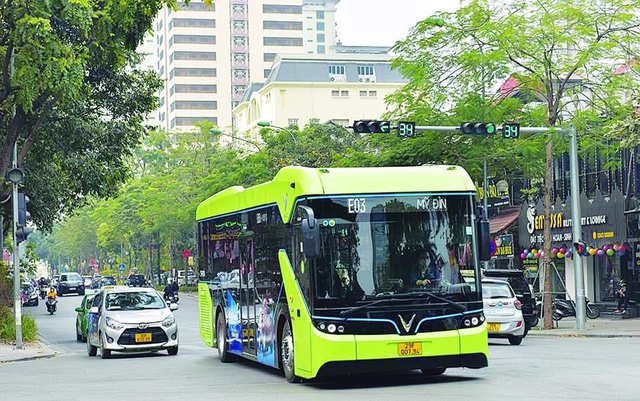
Ha Noi to pilot low-emission zones at Hoan Kiem ward from July 1, 2026 - Illustration photo
The initiative aims to gradually reduce pollution while encouraging the adoption of environmentally friendly transport.
Ms. Le Thanh Thuy - Deputy Head of the Environment Division under the Municipal Department of Agriculture and Environment said Ha Noi is gradually develop policies for low-carbon zones.
In the initial phase, the pilot zone will cover a relatively small area, largely building on existing pedestrian streets and extending to nearby parts of Hoan Kiem ward.
Following the pilot period, the city plans to expand the low-emission zone to cover the central part of Hoan Kiem ward, and to reach Ring Road 1 and eventually Ring Road 2 in line weith the Government's broader direction over the next three to five years.
Ha Noi also aims to gradually limit fossil fuel-powered vehicles, with stricter control in designated low-emission areas. Certain vehicles that fail to meet emission standards may face restrictions or bans.
To support this transition, the city is developing policies to encourage the use of clean vehicles, which are expected to be submitted to the municipal People's Council in early 2026.
The system will be monitored through a combination of surveillance cameras, emission measurement devices, and an integrated AI-driven data platform, alongside QR codes and automated toll collection to ensure transparent and effective management.
Experts stress that implementation should be carried out cautiously, with well-coordinated policies to ensure both feasibility and long-term effectiveness.
Dr. Pham Sy Thanh, Director of the Center for Economic and Strategic Research, noted that transitioning to green transportation is a long-term process requiring careful preparation and a vision spanning at least a decade. He suggested a phased approach—first improving the efficiency of internal combustion engine vehicles, then shifting to new-energy vehicles, and ultimately developing an intelligent transport system.
From a policy standpoint, Nguyen Xuan Thuy of the University of Economics under Viet Nam National University, Ha Noi, and a consultant to the United Nations Industrial Development Organization, emphasized the need to align transport policies with the development of the domestic automobile and motorcycle industry. She noted that the transition should not only address congestion and pollution, but also support emissions reduction and the growth of a green industrial sector.
International experience shows that effective transport transformation requires a coordinated mix of policy tools. Financial incentives—such as subsidies for electric vehicles and tax and fee reductions—are crucial in the early stages to stimulate demand. These should be complemented by regulatory measures, including low-emission zones, emission labeling, and emission-based charges.
Infrastructure development is also key. Expanding charging networks, battery-swapping systems, and requiring charging facilities in buildings can help ease concerns and improve access for users transitioning to electric vehicles.
According to the Ha Noi Department of Agriculture and Environment, the city is developing a roadmap for low-emission zones tailored to local conditions. Officials note that pedestrian streets already function as a form of low-emission zone, and pilot models will provide a basis for broader expansion.
Meanwhile, the Ha Noi Department of Construction said the city will continue promoting public transport, managing high-emission vehicles, and encouraging the use of cleaner alternatives. Plans also include expanding pedestrian areas, improving transit connectivity, and investing in green infrastructure such as charging stations and battery treatment systems.
Authorities are also working on support policies for individuals and businesses to transition to environmentally friendly vehicles, alongside building a monitoring and evaluation system based on scientific tools and digital technologies./.